


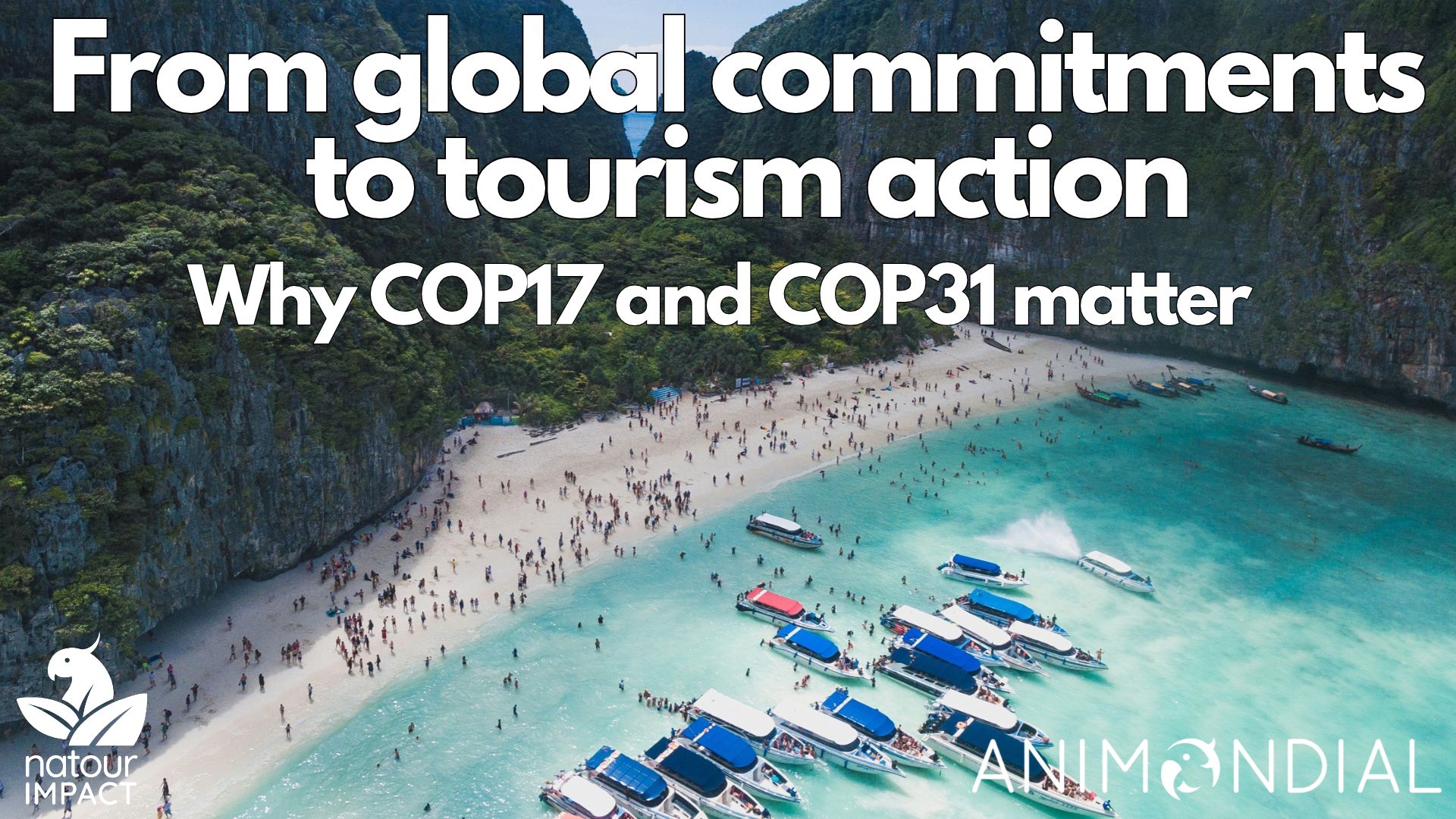
03 Nov From global commitments to tourism action – Why COP17 and COP31 matter
What connects a tourism business’s purchasing decisions with the international negotiations on climate change and biodiversity?
More than we might think.
The food served in a hotel, the materials used in its refurbishment, the energy powering a cruise ship and the destination experiences offered by a tour operator all connect tourism with the natural environment. These decisions influence resource use, pollution, greenhouse gas emissions and pressures on wildlife and habitats.
They also influence the resilience of the business and the destinations it visits.
With the UN biodiversity summit, COP17, recently held in Yerevan, Armenia, and the UN climate summit, COP31, taking place in Antalya, Türkiye, later in November, tourism has an opportunity to understand how global policy can inform practical business action. Both processes are focused on addressing the interconnected climate and biodiversity crises, translating ambition into action by accelerating implementation of existing commitments.
What should tourism businesses be looking out for?
1. Greater accountability for businesses’ relationship with nature
COP17 undertook the first global review of progress towards the Kunming–Montreal Global Biodiversity Framework. Agreed in 2022, the Framework contains 23 targets for 2030, addressing the drivers of biodiversity loss. This year’s review considers where implementation is advancing and where action must accelerate.
For businesses, Target 15 is particularly relevant. It calls on governments to encourage and enable businesses to assess and disclose how their operations depend on nature and where their activities create pressure, and to ensure the state of nature in the location of operation guides their decision-making. Considerations include energy and water usage, food production, timber sourcing, textiles and other purchased goods connecting a business with environmental pressures.
Understanding those connections provides the basis for better policies, supplier requirements and fine-tuned investment decisions.
2. Connecting climate action with the condition of destinations
Ahead of COP31, the EU is calling for implementation of national climate plans, progress on the transition away from fossil fuels, accelerated clean energy deployment and stronger climate resilience. The COP31 Presidency has also identified food security, oceans and seas, zero waste and cooperation between the environmental conventions among its priority themes.
For tourism, this creates an opportunity to connect emissions reduction with a fuller understanding of destination resilience. An accommodation provider can assess energy efficiency alongside water availability and heat exposure. A tour operator can consider how changing environmental conditions affect itineraries, suppliers and visitor experiences. Destination partnerships can explore how restoring habitats could support biodiversity while reducing exposure to flooding, erosion or extreme heat.
The need is to ensure climate and nature policies reinforce one another – and that proposed solutions suit the ecological conditions of the destination.
3. Making procurement a practical means of reducing pressure
Procurement is one of the clearest ways to translate environmental commitments into everyday business decisions.
The Biodiversity Framework’s Target 16 calls for policies that enable sustainable consumption, halve global food waste by 2030, reduce overconsumption and substantially reduce waste generation. For tourism, this provides a clear connection between global ambition and the purchasing, catering and resource-management decisions made every day.
Several EU measures help make that connection more concrete:
- The EU Deforestation Regulation addresses specified products associated with cattle, cocoa, coffee, oil palm, rubber, soya and wood. Main obligations are scheduled to apply from 30 December 2026 for large and medium operators, with later application for most micro and small operators. Tourism buyers should establish which purchases are covered and what evidence their suppliers can provide.
- The Packaging and Packaging Waste Regulation began applying in phases from 12 August 2026. Further measures follow, including restrictions from 2030 on certain single-use packaging relevant to hospitality, such as miniature hotel toiletries. Businesses can begin reviewing packaging specifications and opportunities for reuse and refill now.
- The Ecodesign for Sustainable Products Regulation provides a framework for product-specific sustainability requirements. Its working programme includes categories relevant to tourism, such as textiles and furniture. Requirements are being developed progressively, so businesses should track the measures relevant to their purchases rather than assume that every product already needs a digital product passport.
Businesses also have practical resources available today. The European Commission’s Green Public Procurement criteria, including criteria for food and catering services, offer specifications that private buyers can draw upon voluntarily.
For a tourism business, a more environmentally responsible procurement policy could prioritise traceable sourcing, reduced food waste, durable and repairable products, less packaging, and supplier practices that address water use, pollution and habitat impacts.
Buying locally can support communities, but location alone does not demonstrate lower environmental impact. How a product is produced – and the condition of nature where it is sourced – also matters.
4. Participating in nature recovery at destination level
The EU Nature Restoration Regulation establishes binding restoration targets for EU Member States, with measures intended to cover at least 20% of the EU’s land and sea areas by 2030. National restoration planning creates a practical point of connection between environmental priorities and destination development.
Tourism businesses can explore partnerships that support those priorities: habitat restoration, improved visitor management, responsible access, monitoring and sustained funding. Any business contribution needs credible governance, measurable outcomes and appropriate community involvement. Funding restoration should accompany action to avoid and reduce the business’s own pressures.
Turning policy direction into business decisions
EU sustainability reporting and due diligence rules have been narrowed through the 2026 simplification package, with requirements dependent on company size, structure, activities and jurisdiction.
Nevertheless, every business can use these policy frameworks to guide proportionate action by taking action to:
- Assess its relationship with nature across operations, destinations and supply chains.
- Identify priority pressures, considering their severity and the ecological conditions involved.
- Update purchasing and operational procedures with clear responsibilities and realistic supplier expectations.
- Work with destination partners, aligning business contributions with local environmental priorities.
- Measure progress using evidence to improve decisions and substantiate claims.
COP17 and COP31 offer an opportunity to strengthen the policies, cooperation and investment needed for change. Tourism can help turn that direction into practical results through what it buys, how it operates and how it supports the places people travel to experience.
Nature is the destination. Protecting it is tourism’s business.
Daniel Turner, Director
Find out more …
- Key outcomes for businesses from CoP17 are discussed in this update from Business for Nature; there is also a UN summary story here.
- Integrate nature into your business with our range of policy, strategy and planning support services.
- Assess your individual business nature risks and opportunities quickly and efficiently using NATOUR IMPACT, our award-winning online assessment tool.